...

Residential Pest Control in Atlanta, GA

Pest Control Atlanta has helped homeowners across Atlanta and Fulton County since 2003. We inspect the whole property, treat the pests that are active, and deal with the entry points and conditions letting them in.

Serving Atlanta, Fulton County, and 20+ communities across Metro Atlanta.

Pest Control Atlanta service truck parked in an Atlanta residential neighborhood

Why Atlanta homeowners choose Pest Control Atlanta

Serving Atlanta Since 2003

More than two decades treating homes across Atlanta and Fulton County.

Residential Pest-Control Focus

Household pests are our primary work, with commercial service available too.

Inspection, Treatment, Prevention

We identify the pest, treat what is active, then close off how it got in.

Atlanta and 20+ Metro Communities

Coverage across the city, its neighborhoods, and surrounding Metro Atlanta.

Pest control technician identifying an insect inside a home
About PCA

A local pest-control company built around Atlanta homes

Pest Control Atlanta (PCA) has worked in Atlanta homes since 2003. Georgia's climate keeps pests active for most of the year, so we focus on why they are getting in rather than only what you can see.

  • We inspect attics, crawl spaces, foundations, kitchens, bathrooms, and the exterior perimeter.
  • We identify the pest correctly before choosing a treatment.
  • We look at the moisture, food, and harborage conditions supporting the problem.
  • We explain what we found and what we recommend, in plain terms.
More about Pest Control Atlanta
Technician applying an exterior perimeter pest treatment to a home

Residential pest control, from the crawl space to the roofline

Most household pest problems trace back to a way in and a reason to stay. We work through the whole property so the treatment holds after we leave.

  • Identification first. The right treatment depends on the species, not just the sighting.
  • Entry points. Foundation gaps, utility penetrations, vents, and rooflines get checked and sealed where needed.
  • Kitchens and bathrooms. Plumbing voids and crack-and-crevice harborage are treated directly.
  • Attics and crawl spaces. Insulation, wiring, and framing are inspected for rodent and termite activity.
  • Yard and perimeter. Standing water, dense cover, and stored material next to the foundation are addressed.
Explore Residential Pest Control

Commercial and urgent pest control

Residential work is our main focus. We also serve commercial properties and situations that need prompt attention.

Pest control technicians treating a commercial warehouse

Commercial Pest Control

Pest management for Atlanta businesses, scheduled around your operating hours and documented for each visit.

Commercial pest control

Urgent Pest Situations

Dealing with pest activity that needs prompt attention? Call PCA to explain what you are seeing and ask about current service availability.

Get help with an urgent pest problem

Not Sure Which You Need?

Describe the pest, where you are seeing it, and how long it has been going on. We will tell you what the visit would involve.

Call (404) 647-6677

How residential pest control works

Three stages, applied to your property rather than a script.

1

Inspect the Home

A technician works through attics, crawl spaces, foundations, kitchens, bathrooms, and the exterior perimeter to identify the pest and find how it is getting in.

2

Treat the Active Problem

Treatment is applied where the pests actually are, using Integrated Pest Management principles rather than blanket spraying across the property.

3

Help Reduce Recurring Activity

We seal entry points, place monitoring where it makes sense, and cover the moisture and harborage conditions that let the problem restart.

Not Sure What Is Causing Pest Activity in Your Home?

Talk with Pest Control Atlanta about the signs you are seeing and where the activity is occurring.

Discuss Your Pest Problem

Common pest pressure in Atlanta by season

General seasonal patterns for the Atlanta area. This is background for planning, not a live forecast.

March to May

Spring

Ants push indoors through foundation gaps as soil warms. Swarming termite alates indicate a colony nearby. Ticks become active in tall grass as temperatures rise.

Termite control

June to August

Summer

Standing water drives mosquito breeding, and species found in Georgia can carry West Nile virus. Wasp and yellow jacket colonies reach full size near decks and eaves.

Mosquito control

September to November

Fall

Mice and rats move indoors as outdoor food dries up, fitting through dime-sized gaps. Stink bugs and boxelder bugs cluster on sun-facing walls looking for a way in.

Rodent control

December to February

Winter

Rodents nest in wall voids and attic insulation, chewing wiring and contaminating stored food. German cockroaches stay active year round near kitchen and bathroom moisture.

Rodent exclusion

Seasonal patterns above reflect general guidance for Georgia from sources including the University of Georgia Cooperative Extension and the CDC. Timing varies year to year with local weather.

Before and After: Pest Work in Atlanta Homes

Two projects from our work in the Atlanta area. Drag each slider to compare the property before treatment with the same view afterwards.

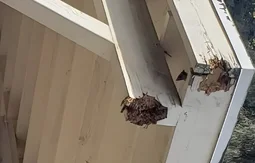
Termite-damaged wooden beam and debris in an Atlanta home before repairThe same wooden beam after termite damage repair and treatment
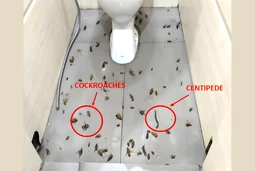
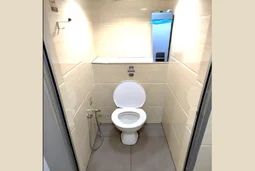
Atlanta bathroom floor with a cockroach infestation before pest control treatmentThe same Atlanta bathroom after cockroach treatment, with no visible pests

Images show work carried out by Pest Control Atlanta. Individual results vary with the property, the pest, and how long the problem has been present.

Call (404) 647-6677 about a similar problem

Residential Pest Control Across Metro Atlanta

Serving Atlanta, Fulton County, and 20+ communities across Metro Atlanta.

Atlanta

  • Atlanta, GA

Atlanta Neighborhoods

  • Buckhead
  • Midtown
  • Downtown Atlanta
  • Virginia-Highland
  • Inman Park
  • Old Fourth Ward

North Metro Atlanta

  • Sandy Springs, GA
  • Roswell, GA
  • Alpharetta, GA
  • Johns Creek, GA
  • Milton, GA
  • Mountain Park, GA
  • Brookhaven, GA

South and Southwest Metro Atlanta

  • East Point, GA
  • College Park, GA
  • Hapeville, GA
  • Fairburn, GA
  • Union City, GA
  • Palmetto, GA
  • Chattahoochee Hills, GA
  • City of South Fulton, GA

Do not see your area listed? Call and we will tell you whether we cover your neighborhood.

Our approach to ongoing pest support

Pest control in Georgia is rarely a single visit. Plans include follow-up, and if a covered pest returns between your scheduled visits we come back and re-treat at no additional charge.

Coverage terms depend on the pest and the plan, so ask what applies to your property when you call.

  • Follow-up visits are part of the plan, not an add-on.
  • Re-treatment between scheduled visits for covered pests.
  • Findings and recommendations explained after each visit.

Frequently asked questions

Residential questions first, then a shorter commercial group.

We treat the pests common in Atlanta homes: ants, termites, cockroaches, rats and mice, spiders, mosquitoes, stinging insects, bed bugs, and fleas and ticks. We also handle wildlife removal and entry-point exclusion work on attics, crawl spaces, and foundation lines.

Pricing depends on the pest, the size of your property, and whether you need a one-time treatment or an ongoing plan. Call (404) 647-6677, describe what you are seeing, and we will talk through the options and what they cost.

Call (404) 647-6677 to schedule. We book by phone so we can ask what pest you are seeing, where in the home it is showing up, and how long it has been going on before a technician is assigned.

A technician inspects the areas pests actually use: attics, crawl spaces, foundations, kitchens, bathrooms, and the exterior perimeter. The goal is to identify the pest correctly, find the entry points, and note the moisture, food, and harborage conditions supporting the infestation.

We work from Integrated Pest Management principles, which favor targeted application and entry-point sealing over blanket spraying. Tell us about children, pets, or sensitivities in the home when you call, and the technician will explain which products are being used and any re-entry interval that applies.

Many Atlanta homeowners use a quarterly schedule, because Georgia’s climate keeps pests active for most of the year. The right frequency depends on which pest you are dealing with and how established the infestation is.

A termite bond is an ongoing agreement covering termite inspection and re-treatment. Georgia’s climate supports subterranean termite activity year-round, which is why many homeowners in the state carry one. Ask about the specific terms that would apply to your property when you call.

Rodent work has three parts: removing the active rodents, sealing the entry points they used (usually in the attic, crawl space, or along the foundation), and cleaning up contamination. Skipping the exclusion step is the most common reason rodents return.

Mosquitoes are generally active in the Atlanta area from spring through early fall, tracking warm temperatures and standing water. Eliminating standing water around the property is the single most effective step a homeowner can take.

Commercial pest control questions

Yes. We serve commercial properties across Atlanta and Fulton County alongside our residential work, and visits can be scheduled around your operating hours.

The inspection and treatment principles are the same, but commercial work is built around the layout and use of the building, scheduled to avoid disrupting operations, and documented for each visit.

Yes. Wildlife removal and exclusion work, which means sealing the gaps animals use to get inside, is available for both homes and commercial buildings.

Talk With Pest Control Atlanta About Your Home

Tell PCA what you are seeing and where pest activity is occurring.

Call (404) 647-6677

Serving Atlanta and 20+ Metro Atlanta communities.

Seraphinite AcceleratorOptimized by Seraphinite Accelerator
Turns on site high speed to be attractive for people and search engines.