

Long-term rat control comes down to four things: correctly identifying the species you’re dealing with, removing what’s feeding and sheltering them, deploying the right elimination method, and sealing the building so new rats can’t move in behind the ones you removed. Skip any one of those steps and the infestation comes back within weeks.
Atlanta rarely sees a hard freeze, so rat populations here breed nearly year-round instead of dying back in winter the way they do farther north. Pair that with Fulton County’s stock of older homes — open crawl spaces, settled foundations, mature tree canopy over the roofline — and you get conditions that are unusually hospitable to both Norway rats and roof rats.
This guide covers identification, the DIY methods that genuinely work, a five-step removal process, and the point where a professional inspection becomes the faster, cheaper option.
How Do You Tell Norway Rats and Roof Rats Apart?
Check the tail and where you are finding activity: Norway rats have a tail shorter than their body and stay at ground level, while roof rats have a tail longer than their body and climb into attics and trees. Two species account for nearly every residential call in the Atlanta area, and they behave differently enough that treating one like the other wastes time and money.
Norway Rats (Ground-Dwelling)

Norway rats (Rattus norvegicus) are the larger of the two — 7 to 10 inches long, with a tail shorter than their body, small ears, and a blunt nose. They burrow at ground level: under foundations, in crawl spaces, along fence lines. They’re strong swimmers and occasionally enter through damaged sewer lines or toilet traps. In Fulton County, they’re most common in homes with exposed crawl spaces and older, unsealed foundations.
Roof Rats (Climbing)

Roof rats (Rattus rattus) run smaller — 6 to 8 inches, tail longer than the body, large ears, pointed nose. They climb: trees, power lines, fences. They prefer attics and upper floors over basements. Atlanta’s mature tree canopy in neighborhoods like Buckhead, Druid Hills, and Ansley Park gives roof rats a direct route from branch to roofline, which is why exclusion work in those areas focuses on soffits and fascia rather than foundations.
| Characteristic | Norway Rat | Roof Rat |
| Body length | 7–10 in | 6–8 in |
| Tail | Shorter than body | Longer than body |
| Preferred location | Ground level, crawl spaces | Attics, upper floors |
| Climbing ability | Poor | Excellent |
What Are the Signs of a Rat Infestation in Your Home?
Watch for dark, pellet-shaped droppings, gnaw marks on food packaging or wood, scratching sounds in the walls or ceiling at night, and a musty, ammonia-like odor. Early detection keeps a rat problem cheap to fix — the longer an infestation runs, the more entry points, nests, and damage you’re paying to undo.
Visual Evidence
- Droppings: dark, pellet-shaped, 1/2 to 3/4 inch, concentrated near food sources and along walls. Fresh droppings are soft and dark; old ones are gray and crumbly.
- Gnaw marks: on food packaging, wood, plastic, even soft metal. Fresh marks are lighter in color.
- Grease and rub marks: dark, oily smears along baseboards and entry points where rats travel repeatedly.
- Nests: shredded paper, fabric, or insulation gathered in warm, hidden spots.
- Burrows: Norway rats dig near foundations, under debris, and in garden beds.
Sounds and Smells
Rats are nocturnal, so scratching or scurrying in walls, ceilings, or under floors at night is often the first sign homeowners notice. A persistent musty, ammonia-like odor from accumulated urine is another reliable indicator, and pets that suddenly fixate on a wall or cabinet are frequently detecting rodents before their owners do.
Why Do Atlanta and Fulton County Homes Attract Rats Year-Round?

Atlanta’s humid subtropical climate rarely delivers the hard, sustained freeze that knocks back rodent populations farther north, so breeding continues nearly year-round instead of pausing for winter. Two seasonal patterns matter most for local homeowners: in fall (September through November), rats move indoors seeking warmth as outdoor vegetation dies back and their food supply thins; in spring (March through May), breeding surges as litters from the previous months mature and disperse to find new territory.
Fulton County’s housing stock compounds the problem. In-town neighborhoods built before the 1980s commonly have masonry foundations that have settled and cracked over decades, along with crawl space vents that were never properly screened. Combined with mature tree cover feeding roof rat populations, this is why Fulton County pest control calls for rats run higher than in newer, slab-foundation subdivisions further out.
What Health Risks and Property Damage Do Rats Cause?

Rats carry pathogens that cause leptospirosis (from contact with contaminated water or soil), salmonellosis (from food contamination), and rat-bite fever. Wild Norway rats specifically can also carry Seoul virus, a hantavirus strain distinct from the one associated with deer mice.
Property damage is often the costlier problem. Rats gnaw continuously to keep their incisors short, and chewed electrical wiring is a documented cause of unexplained residential fires. Left unaddressed, they also shred insulation, damage structural wood, and contaminate stored food faster than most homeowners realize.
Which DIY Rat Control Methods Actually Work?
A multi-pronged approach delivers the best results: combining trapping, exclusion, and sanitation eliminates the current population while preventing reinfestation.
Snap Traps: The Most Effective DIY Method
Traditional snap traps remain one of the most effective, economical options. Use rat-sized traps (not mouse traps — rat traps have larger trigger plates and stronger springs), set perpendicular to walls with the trigger end facing the baseboard, since rats travel along edges. For a moderate infestation, deploy 12 to 24 traps and check them daily.
Electronic Traps for Quick Results
Electronic traps deliver a lethal high-voltage shock and are reusable, killing 50-plus rats per set of batteries with no blood or handling required — ideal for homeowners who’d rather not deal with a traditional trap. They cost more upfront and only catch one rat at a time before needing to be emptied.
Live Traps for Humane Removal
Live-catch traps let you capture rats without killing them. Check them every few hours to prevent suffering from stress or heat, and release well away from your property — though relocated rats often don’t survive in unfamiliar territory. Check Georgia DNR guidance on wildlife relocation before releasing on land you don’t own. Live trapping alone rarely solves an infestation because it doesn’t address why rats entered in the first place.
Rodenticides and Bait Stations (Safety Considerations)
Rodenticides can work but require caution, especially around children, pets, or wildlife. Always use tamper-resistant bait stations, position them along walls and in areas inaccessible to non-target animals, and follow label directions exactly — it’s federal law. Poisoned rats can die inside walls or attics, causing odor problems, and secondary poisoning is a real risk to pets and wildlife that eat a poisoned rodent. The EPA publishes detailed rodenticide safety guidance. Because of these complications, we generally recommend trapping over poisoning for residential use.
Natural Repellents: What Doesn't Work

Peppermint oil and ammonia may discourage rats from a specific spot temporarily, but neither eliminates an established infestation. Mothballs contain toxic naphthalene and aren’t legal to use as a rodent repellent. Ultrasonic devices haven’t held up in controlled testing — rats adapt to the sound quickly. What actually works long-term is sanitation, exclusion, and habitat modification; repellents are, at best, a minor supplement to those.
What Is the 5-Step Process for Long-Term Rat Removal?
This proven framework works for attics, crawl spaces, walls, and yards alike, and it’s the same sequence a trained technician follows on a paid inspection.
Step 1: Inspection
Walk the exterior and check the roofline for gaps in fascia and soffits, the foundation for cracks or holes around pipe penetrations, and every vent for a secure mesh cover. A rat can squeeze through a hole the size of a quarter.
Step 2: Deploy Trapping
Indoors, use 12 to 24 snap or electronic traps placed perpendicular to walls, trigger end toward the baseboard, positioned along rafters and high-activity areas. Outdoors, space weather-resistant bait stations 15–20 feet apart along fence lines and travel routes. Pre-baiting traps without setting them for a few days helps overcome rats’ natural wariness of new objects. Continue until 5–7 days pass with no catches indoors, or 14 days outdoors.
Step 3: Seal Entry Points (Exclusion)

This is the step that makes the result long-lasting rather than temporary. Use copper mesh or steel wool with expanding foam — rats chew through plain foam, but not steel wool. Install tight-fitting door sweeps on garage and entry doors, and trim tree branches back at least 6 feet from the roofline to cut off the climbing route roof rats use. If your home has multiple entry points or an inaccessible crawl space, professional exclusion work is usually faster and more thorough than a DIY pass.
Step 4: Clean and Eliminate Attractants
Ventilate the area for 30 minutes before entering, wear an N95 respirator and gloves, and spray droppings with a 10% bleach solution before cleanup — never dry-sweep or vacuum droppings, since that aerosolizes contaminants. Heavily contaminated insulation is worth having professionally removed rather than handled DIY.
Step 5: Ongoing Monitoring
Keep 2–3 monitoring traps permanently in vulnerable areas, check monthly, and re-inspect your exclusion work each season — foundations settle and seals degrade. Maintain a 3-foot vegetation clearance around the foundation and keep tree branches 6-plus feet from the roofline going forward.
A single pair of rats can produce up to 2,000 descendants in a year under ideal conditions, which is why early, complete action on all five steps matters more than any single method.
Struggling With a Rat Infestation in Atlanta or Fulton County?
When Should You Call a Professional Instead of DIY Rat Control?
DIY methods handle small, early-stage incursions well. A larger or established infestation usually needs a professional.
When DIY Is Enough
If you’re seeing occasional droppings in one area, activity is limited to a garage or shed, and you can identify one or two obvious entry points, a disciplined trapping-and-sealing effort will usually resolve it.
When to Call a Professional
Call a professional when you hear activity inside walls or the attic, trapping shows no improvement after two to three weeks, you find multiple entry points around the structure, or you’re managing a commercial property where a documented result matters. Trained technicians identify every entry point, deploy commercial-grade equipment, and handle hazardous cleanup like contaminated insulation removal.
What Professional Rat Control Costs

Pricing depends on your home’s size, how many entry points need sealing, and whether full exclusion is required. Trapping-only service costs less than comprehensive exclusion work that seals every entry point. Pest Control Atlanta’s rat control service prices these separately so you’re not paying for exclusion you don’t need — schedule an inspection for an exact number on your property.
How Do You Prevent Future Rat Infestations Year-Round?
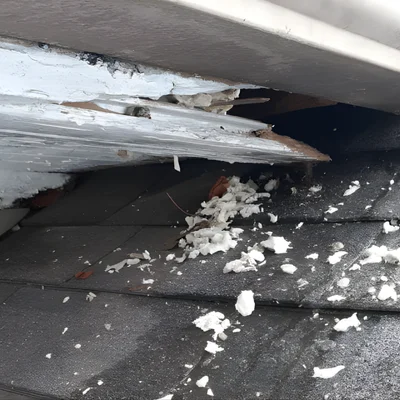
Because Atlanta doesn’t get a hard winter die-back, prevention is a year-round job, not a one-time fix. Re-check your exterior seals every fall before the first cold snap, when rats are most motivated to find a way inside. In spring, walk the perimeter again, trim back new growth, and confirm crawl space vents and foundation gaps are still sealed. Keeping 2–3 monitoring traps in place year-round catches a new incursion before it becomes an infestation.
Don't Let a Rat Problem Become a Structural One
Frequently Asked Questions About Rat Control
Ayesha Ishaque
Ayesha Ishaque holds an MPhil in Zoology from the University of Education Lahore and has authored 3 peer-reviewed research publications on biotechnology, algae, and bioplastics — including Sericin as Novel Microbial Culture Medium, Nutritional Health Connection of Algae, and Exploration of Polyhydroxybutyrate (PHB) Production. She brings a strong scientific foundation to her writing on pest biology and control.
Related Guides & Services

Need Rat Control Now?
Trained technicians serving Atlanta and Fulton County. Professional service available.
Why Homeowners Trust Us
- Satisfaction Guaranteed
- Residential & Commercial Service
- Licensed & Insured
- Affordable Pricing
